

When examining the frontiers of metabolic health, cellular energy, and longevity research, scientists are increasingly turning their attention to a fascinating compound known as MOTS-c. Short for Mitochondrial Open Reading Frame of the 12S rRNA Type-c, this unique peptide has shifted how biologists understand cellular communication.
Unlike traditional hormones, when you order MOTS-c it is a direct molecular messenger born from the energy centers of our cells. In this comprehensive guide, we will break down the structural uniqueness, biological mechanics, and primary preclinical research arenas defining this potent metabolic regulator.
To understand why MOTS-c is creating such a buzz in longevity research, you have to look at its genetic birthplace. Virtually every peptide and hormone studied in human biology is encoded by the DNA inside a cell’s nucleus.
MOTS-c completely shatters this rule. It belongs to a rare, newly discovered class of signaling molecules called mitochondrial-derived peptides (MDPs).
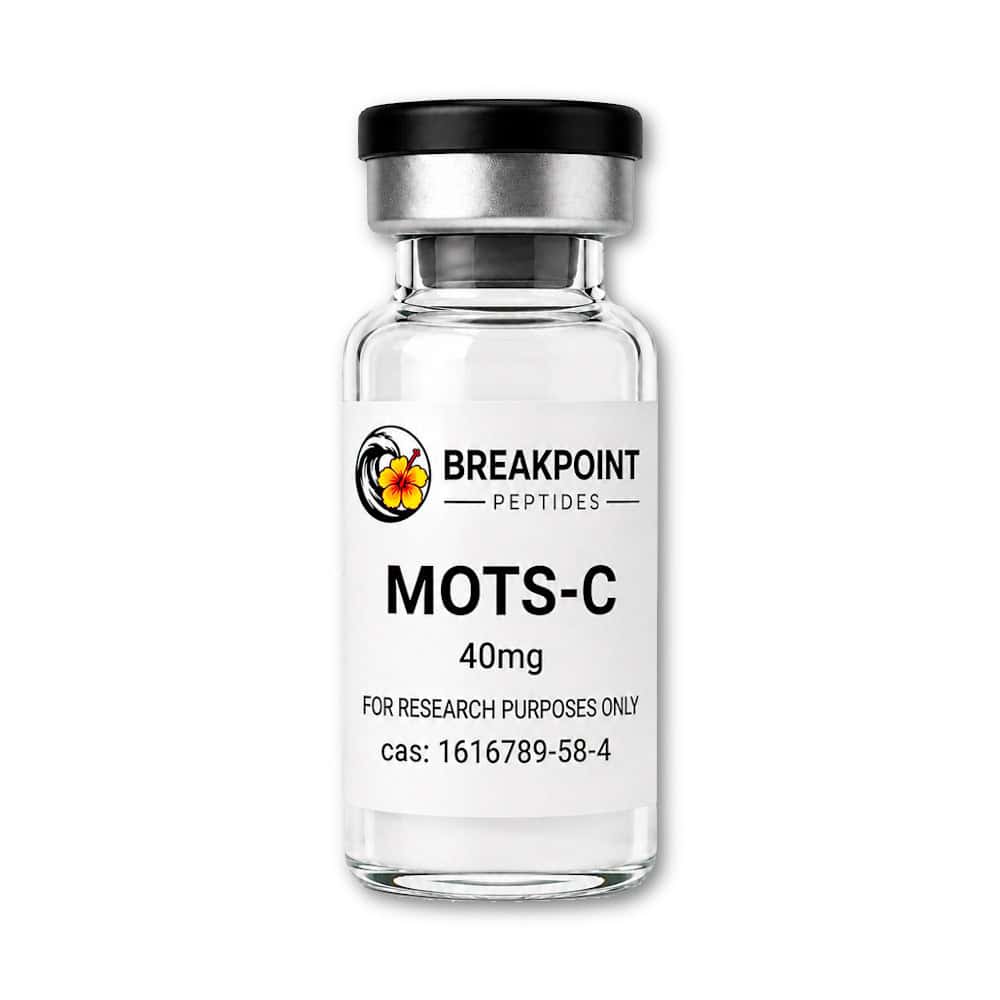

You can view the third-party tested Certificate of Analysis and Safety Data Sheet on our Lab Tests page.
To understand how a mitochondrial-derived signal compares to conventional, nuclear-encoded metabolic therapies, review this benchmark comparison (converted from raw data fields):
MOTS-c stimulates a massive cellular accumulation of a nucleotide intermediate known as AICAR. This build-up acts as a direct trigger for AMPK (Adenosine Monophosphate-Activated Protein Kinase), which is widely recognized as the body’s master energy sensor.
By turning up AMPK, MOTS-c prompts skeletal muscle tissue to suck up glucose, dramatically accelerates the burning of fatty acids, and stops the liver from pumping out excess glucose.
The peptide selectively binds to and restrains a key enzyme in the folate cycle known as MTHFS. By temporarily throwing a wrench into folate metabolism, it briefly pauses new purine synthesis.
This temporary halt acts as a safe, controlled metabolic stress signal, forcing downstream survival mechanisms and longevity cascades to wake up and protect the cell.
Once MOTS-c reaches the nucleus, it interacts directly with antioxidant response elements. It tunes the expression of defensive genes controlled by transcription factors such as ARE and Nrf2.
This action actively upgrades a cell’s internal armor, allowing it to withstand extreme oxidative stress and handle metabolic shifts gracefully.
In animal models fed a high-fat diet designed to induce metabolic strain, MOTS-c administration demonstrated powerful protective value. The compound was observed to shield animals from diet-induced obesity, limit fat accumulation inside white adipose tissues, and reverse fatty liver build-up (hepatic steatosis).
Furthermore, it enhanced muscle glucose clearance, completely reversing diet-induced insulin resistance in skeletal tissue.
Natural systemic levels of MOTS-c drop significantly as mammals age. In rodent trials tracking age-related decline, treatment with MOTS-c in older mice successfully restored physical stamina, improved running capacity on treadmills, and reversed age-dependent muscle wasting (sarcopenia).
Because it replicates the systematic benefits of physical exertion at a cellular level, researchers frequently study it as an ‘exercise mimetic’.
Emerging research shows that MOTS-c plays a critical role in skeletal framework integrity. It has been shown to signal bone marrow mesenchymal stem cells to transform into osteoblasts (the cells responsible for building bone) via specialized growth pathways.
Simultaneously, it turns down the activity of osteoclasts (cells that break down bone), providing invaluable structural insights for bone-loss research models.
Despite the vast amount of compelling preclinical data, MOTS-c remains bound by clear scientific limitations:
• The Clinical Gap: The vast majority of peer-reviewed data on MOTS-c is restricted to in vitro cell cultures and rodent models. Robust, long-term human clinical trials evaluating official dosing protocols and safety profiles are currently missing.
• Regulatory Restrictions: MOTS-c is not approved for human therapeutic use, clinical deployment, or medical prescription by major international bodies like the FDA or EMA.
• Performance Classifications: Because of its powerful ability to optimize metabolic performance and mimic the effects of physical training, the compound falls under rigid class limitations regarding performance-enhancing substances. It remains designated strictly as an experimental laboratory research chemical intended for analytical and scientific investigation.
| Disclaimer: This material is compiled strictly for educational, informational, and historical laboratory reference. Reviewing experimental compounds should always be performed within authorized laboratory safety parameters. |


All products offered on this website are intended for laboratory research, analytical, and in vitro experimentation purposes only. The products on this site have not been evaluated, approved, or cleared by the (FDA). They are not intended to diagnose, treat, cure, or prevent any disease or medical condition. By entering, you assume full and total liability for the handling, compliance, and legal use of any materials purchased. You agree to the Terms and Service of BreakPoint Peptides.